










Why does Planning Poker reduce Jira estimation bias?
Jira estimation bias creeps in when the loudest voice, often the most senior engineer, anchors the whole team's story point guess. Planning poker fixes this by having every teammate reveal their estimate simultaneously and privately, so junior and senior opinions carry equal weight before the group discusses and reaches consensus.
- Anchoring bias happens the moment someone says a number out loud. Planning Poker fixes this by hiding all votes until the end
- Every teammate votes privately and at the same time, so junior estimates carry the same weight as senior ones
- Studies show that simply warning teams about bias doesn't work. The process must enforce blind voting rather than just encouraging people to participate. You can't just ask people to speak up, you have to change the voting process itself
Why Do Jira Story Point Estimates Always Land Where the Loudest Voice Says?
Open estimation, where people call out numbers one at a time, feels efficient. It's also one of the easiest ways to bake bias straight into your sprint board. Whoever speaks first sets the anchor, and every estimate after that gets pulled toward it, whether or not it's actually accurate. It's not that anyone's acting in bad faith. It's just that human judgment doesn't hold up well once it's been exposed to someone else's number before it had the chance to form its own.
It gets worse the more senior the first voice is. When a tech lead says "this is a two," a junior engineer who privately thought "this feels more like a five" will usually talk themselves down instead of pushing back in front of the room. That's not laziness, and it's not a lack of opinion. It's the HiPPO effect (Highest Paid Person's Opinion), and it's been documented well beyond software teams. What you end up with is a backlog full of estimates that look precise and consistent, when really they're one person's gut check wearing the team's average like a mask.
The cost shows up two sprints later, when a "two-point" ticket turns into a four-day fire drill, because the number the team committed to was never really the team's number to begin with.
What Is Planning Poker, and Why Does Hiding Estimates Change Everything?
Planning poker is one of the most common sprint estimation techniques: a consensus-based approach where every team member privately selects a story-point value for a backlog item, then reveals it at the same time as everyone else. Popularized by Mike Cohn of Mountain Goat Software, it's become one of the most widely used relative-estimation methods in agile teams, precisely because the mechanics are simple: no number gets spoken until every hand is already played.
That single sequencing change is the whole trick. Anchoring bias depends on hearing a number before you commit to your own, so take that ordering away and the anchor has nothing left to grab onto. Every teammate has to form their own judgment first, before anyone else's opinion can shape it. Only once all the cards are on the table does the conversation actually start, and it's a better conversation for it, because now the team is talking about why the estimates differ instead of just nodding along with whoever spoke first.
It's also why planning poker leans on relative sizing instead of absolute time estimates. Story points ask something like "is this bigger or smaller than that other ticket we already sized?" and that's a comparison humans are decent at. Hours and days, guessed cold, are a comparison humans are pretty bad at. The card decks in planning poker (1, 2, 3, 5, 8, 13, and so on) skip whole numbers on purpose, so the team has to make a real call between values instead of doing easy math.
The Research Behind Anchoring Bias in Software Estimation
This isn't a hunch about meeting dynamics. It's been studied directly in software estimation contexts. Researchers Magne Jørgensen and Stein Grimstad have spent years documenting how anchoring distorts effort estimates, including a widely cited study, "Numerical anchors and their strong effects on software development effort estimates," published in the Journal of Systems and Software. Their broader body of work found that anchoring effects show up even when the anchor value is obviously irrelevant or extreme, and that they're difficult to fully eliminate even when estimators are warned about the bias in advance.
Their findings extend beyond spoken numbers, too. Even a project's framing changes the estimate: describing a task as a "minor extension" produces measurably lower effort estimates than describing the identical task as building "new functionality." If wording alone can move an estimate, a specific number said out loud by a senior teammate is a far stronger anchor. This is the anchoring bias in agile estimation that planning poker is specifically structured to interrupt: it removes the anchor before it can form, rather than asking teams to will away a bias that research shows is genuinely hard to resist once it's in the room.
How Scrum Poker for Jira Runs Blind Voting Without Leaving Your Sprint Board
The theory is straightforward. The friction is usually logistical: physical card decks don't work for hybrid or remote teams, and generic voting tools mean toggling out of Jira mid-ticket, losing context, and copy-pasting results back in by hand.
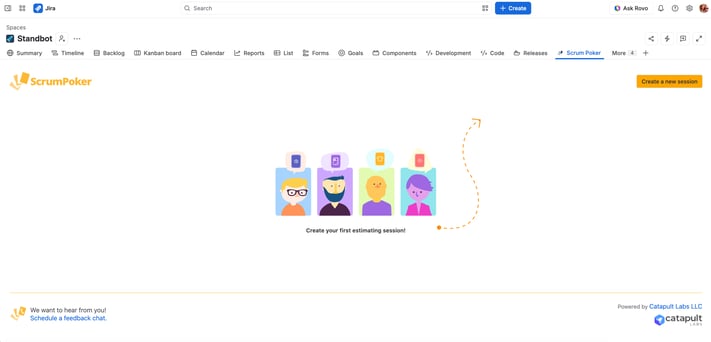
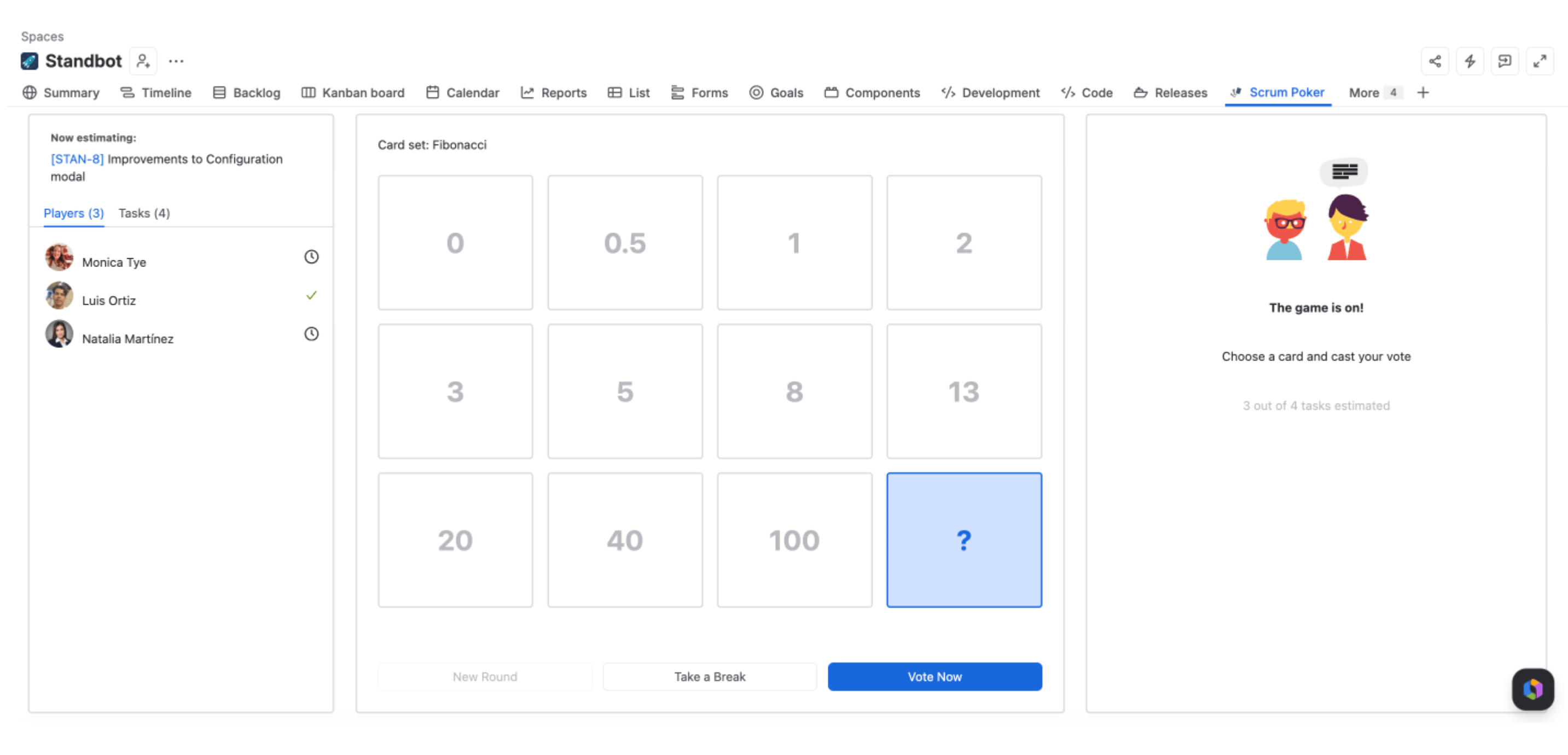
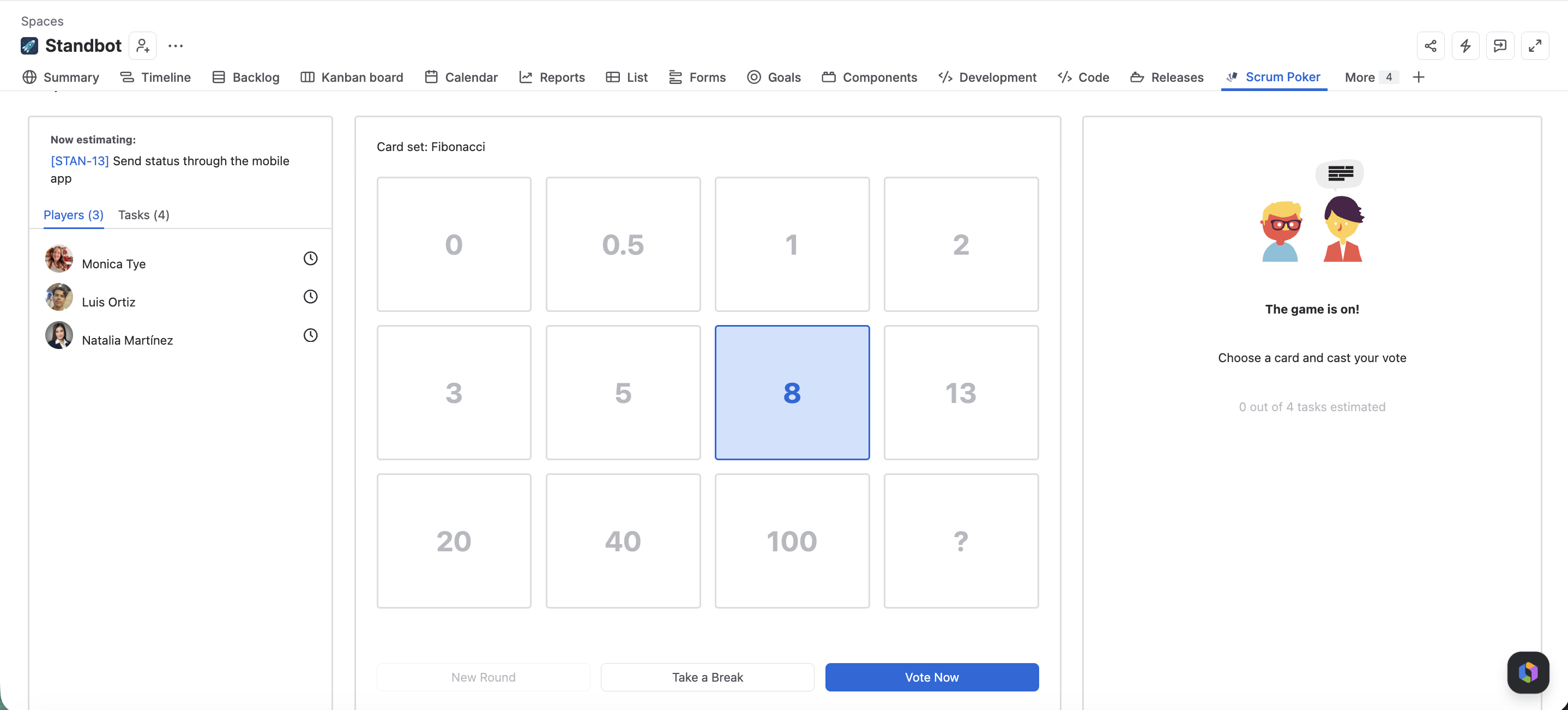
Scrum Poker for Jira runs the same blind, simultaneous vote directly inside your existing sprint board. The Scrum Master pulls up a backlog item, the team votes privately from their own screens (in the room or fully remote, it doesn't matter), and estimates reveal at the same time for everyone. No one sees another vote until all votes are in. When the numbers land far apart, the tool flags the spread automatically so the team can dig into why, which is usually where the most useful conversation of the whole meeting happens. Once the team lands on a number, it writes straight back to the Jira issue, no manual re-entry, no separate tracking sheet.
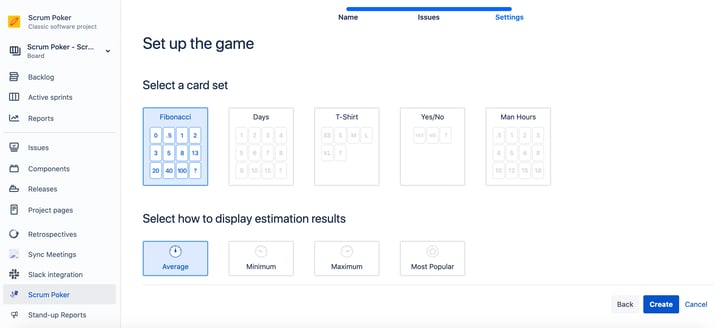
For teams that want story point estimation accuracy without adding another disconnected tool to the stack, this is the difference between "we know bias is a problem" and actually removing it from the room.
3 Estimation Bias Traps Planning Poker Doesn't Fully Solve (and How to Handle Them)
Planning poker fixes anchoring. It doesn't automatically fix every failure mode in the room. Three worth watching for:
- Outlier dismissal. When one person votes an 8 and everyone else votes a 3, the easy move is to treat the 8 as "wrong" and average it away. Often that outlier is the one person who actually reads the edge cases. Treat every outlier vote as a required discussion, not noise to smooth over.
- "Poker by habit." Teams that run the same ceremony for a year sometimes stop actually thinking before they vote. They anticipate the group's usual number and pre-commit mentally, which quietly reintroduces the exact anchoring effect the format was built to prevent. If your reveal is consistently unanimous on the first pass, that's worth questioning, not celebrating.
- False consensus after discussion. A second round of voting, after the group has talked through a spread, will naturally converge, but convergence isn't the same as everyone actually agreeing. This is a version of groupthink in agile teams: once a few respected voices state a position, others fall in line to avoid friction. A quick "does anyone still disagree?" check before locking in the number costs ten seconds and catches real holdouts.
None of these are arguments against planning poker. They're the reason the format works best as a structure for better judgment, not a substitute for it.
Planning Poker + Jira Estimation Bias: Common Questions
What is Jira estimation bias?
Jira estimation bias is the tendency for a team's story point estimates to converge around whichever number is spoken first or loudest, usually from the most senior or vocal team member, rather than reflecting the group's independent judgment. It shows up as anchoring and groupthink, producing estimates that look consistent but are really one person's guess wearing the team's average.
Does Planning Poker take longer than open discussion estimating?
Not meaningfully. Votes happen in parallel instead of one at a time, so a round takes about as long as it would for one person to call out a number out loud. The extra time shows up in discussion when votes land far apart, but that's exactly the conversation you want happening before a ticket gets committed to a sprint, not after.
How is Planning Poker different from just discussing story points as a team?
Open discussion lets the first number spoken anchor everyone else's estimate before they've formed their own opinion. Planning Poker requires every teammate to privately commit to a number before any number is revealed, so the discussion that follows starts from the team's real spread of opinions instead of one person's guess the room quietly agreed with.
Give Every Voice on Your Team Equal Weight in the Next Sprint
Jira estimation bias isn't a personality problem on your team. It's a structural one: whoever speaks first sets the anchor, and everyone else's judgment bends toward it whether they mean it to or not. Planning poker doesn't ask anyone to be less senior or less confident. It just changes the order of operations so every estimate forms before anyone hears another one.
If estimation logistics themselves, not just the bias, have been slowing your team down, we've got tips for more accurate estimating sessions that tackle that half of the problem. And if the "someone always wins" dynamic in estimation feels like a symptom of a bigger psychological-safety pattern on your team, it's worth looking at whether your team feels safe speaking up, not just how it estimates.
